
Columbia Phonograph Co. Cylinders
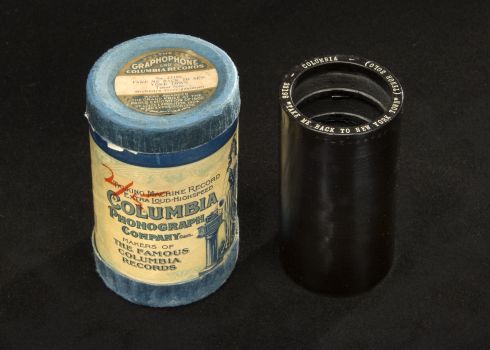
The history of the Columbia Phonograph Company can be traced to 1890, when Columbia began releasing a series of brown wax recordings consisting mainly of whistling solos and band marches. Thomas Edison, who would shortly begin selling commercial brown wax recordings through the North American Phonograph Company, seems to have been beaten to the punch. From what can be gleaned from the company’s cylinder recording catalogs, between 1890 and 1899 all releases were sold to the public in the context of a block system. In other words, band pieces blared by Sousa or banjo tunes strummed by Vess L. Ossman would be segregated, with each artist having a series of cylinder releases. (Dan W. Quinn was an extremely prolific performer, recording more than 300 cylinders for the company.) In each successive catalog, Columbia culled the less popular titles and replaced them in the given block with a series of new releases—thereby creating discographical headaches for modern researchers. By 1899, the tangle of numbers was partially mitigated by Columbia’s introduction of a consecutive numbering system, starting at number 31300. Thus Hebrew vaudeville would be lumped with barbershop quartets, or trumpet solos with "coon" songs, for instance.
By 1902, the gold-moulding process that had begun to revolutionize the production of cylinders (see Edison Gold-Moulded cylinders) was adopted by Columbia. In fact, it is unclear which company was the first to employ the practice of creating a metal master and using it to spin off a much greater number of duplicate cylinders than was possible previously. In any case, Columbia’s switch to the gold-moulded process, unlike Edison's, was not unequivocal. For some years after 1902, both brown wax and “black wax” (moulded) cylinders were released simultaneously, the latter far outliving their brown wax counterparts. The 31300 consecutive numbering series therefore encompasses both brown and black wax cylinders from 1899 on; these are cumulatively known as the 30000 XP series.
The repertoire of Columbia cylinders is similar to that of Edison cylinders, and many artists recorded for both companies; the "exclusive contract" concept clearly was not yet the standard that it is in today's music business. Columbia continued to issue cylinders until 1909, when it stopped releasing new titles and turned to the more successful disc format. The company did continue to distribute cylinders, including Indestructible records, for other companies, but no longer recorded any new pieces.
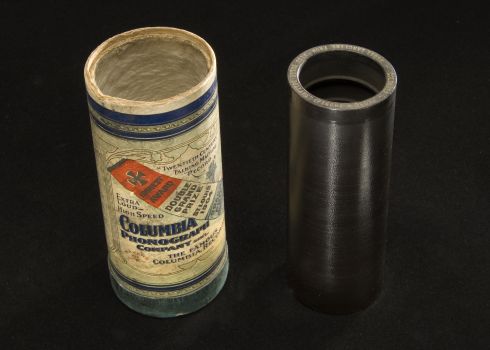
Starting in 1905 the Columbia Phonograph Co. released a series of six-inch long Twentieth Century Talking Machine Record cylinders that played for three minutes rather than the usual two minutes. The series was short-lived and appromimately 189 titles were issued. These cylinders are uncommon today.
